Will Navidson–Tom Navidson Brotherhood
House of LeavesWill Navidson–Tom Navidson Brotherhood is the emotional history of two fraternal twins whose reunion becomes inseparable from the crisis of the house on Ash Tree Lane. Once marked by childhood protection, the bond has been damaged by years of distance, envy, addiction, and unequal achievement; yet the same relationship ultimately produces cooperation, tenderness, and Tom’s heroic death while saving Daisy. Its decisive significance lies in the reversal by which the brother long regarded as unreliable becomes the family’s most selfless protector, forcing Will to confront both his love for Tom and his belief that he failed him.
Identity and Background
Will Navidson and Tom Navidson are fraternal twin brothers. Their childhood relationship was close enough that Karen Green remembers them as having looked after each other more when they lived at home, but by the time the narrative begins they have said little to one another for more than eight years. Karen describes the central imbalance in their adult lives bluntly: Will is successful, while Tom is not, and resentment has accumulated between them.
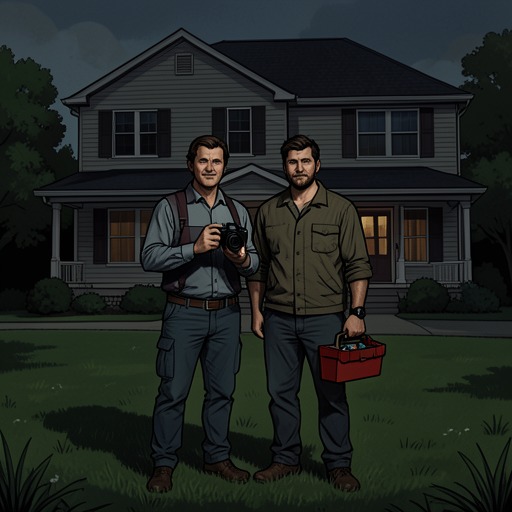
The brothers’ differences are presented as almost comic oppositions. Tom is an affable, overweight giant whose principal pleasures are a game on television, a comfortable place to sit, and the ability to make other people laugh. Will exercises daily, reads demanding criticism, and interprets the world through photography. Tom gets by, whereas Will feels compelled to become something. Yet the contrast does not erase their kinship. Beneath Tom’s broad grin are deep pools of sorrow, and Will’s eyes are described as sharing the same water. Their likeness survives not as identical behavior but as a shared emotional history visible beneath their incompatible adult identities.
Estrangement and Reunion
The long separation is associated with a cluster of losses in Tom’s life. During the eight years away from Will, he became dependent on chemicals, went on unemployment, and ended a developing relationship with a young schoolteacher. The narrative does not state what originally caused the brothers’ rupture, but it implies that Tom envied Will’s success and felt increasingly dissatisfied with his own accomplishments. Tom’s description of the period as having had the old rug pulled out from under him conveys how thoroughly the estrangement destabilized him.
One account connects the rupture to the birth of Chad Navidson. The proposed explanation is that raising a child drew Will’s energy and attention away from Tom, who had previously experienced Will as his only supporter and sympathizer. Tom may therefore have felt abandoned when Will increasingly devoted himself to his son. He sometimes called himself orphaned at the age of forty, the same year that Chad was born. The phrase turns sibling neglect into a form of bereavement: Tom remains alive, but the brotherly place he depended on seems to have disappeared.
The house brings the brothers back into physical proximity. Will calls Tom in the early morning and asks for his tools, and Tom arrives two days later with his usual capacity to amuse, immediately winning over Chad and Daisy with his laughter and McDonald’s french fries. The welcome is affectionate but not yet restorative. When Tom smokes marijuana in the backyard, Will’s disapproval remains unspoken but unmistakable, while Tom refuses to change his behavior. Their body language, avoidance of direct eye contact, and uneasy pauses show that the preceding eight years remain active within the reunion.
Cooperation Under Pressure
The first important movement toward reconciliation comes through the house’s impossible measurements. Tom discovers that the interior exceeds the exterior not by one-quarter inch, as Will had believed, but by five-sixteenths of an inch. No collection of legal pads, napkins, newspaper margins, notes, or equations can explain the discrepancy. The discovery does more than clarify the anomaly: it gives the brothers a shared problem that neither can solve alone.
Afterward, they drive together in silence until Will remarks, “Funny how all it took was a fraction of an inch to get us in a car together.” The line recognizes the absurd scale of the event and the much larger emotional distance it has overcome. Will thanks Tom for coming, and the brothers briefly occupy the same task, vehicle, and uncertainty. Their cooperation does not erase resentment, but it creates a practical form of contact through which intimacy can return without being directly demanded.
Tom later remains involved even when Will and Karen Green disagree over who should enter the dark space. Karen insists that if Will goes, she must go too, because their agreement is bound to mutual protection. She tells Tom that Will has had a lifetime of wandering and danger and should allow someone else to take over. Tom’s presence therefore becomes part of the family’s argument about responsibility: he is not merely Will’s assistant but a possible substitute for the brother’s habitual role as explorer and risk-taker.
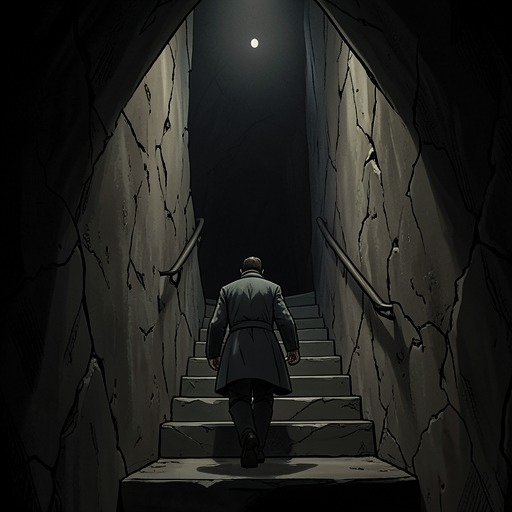
When the household is threatened, Tom spends two nights in the dangerous space near the Spiral Staircase, carrying his bag and papers while maintaining radio contact. The situation places him in the very environment his instincts would tell him to flee. His participation is especially significant because it contradicts the image of Tom as passive, unserious, or incapable of sustained courage. He enters the crisis not through professional ambition but through loyalty to his brother and the family gathered around him.
Collapse, Rescue, and Death
The rescue attempt initially appears to confirm Will’s worst judgment of Tom. When Will Navidson and Billy Reston reach the foot of the stairway on the third day, Tom is absent. Reston’s hands are blistered and bleeding, Kirby “Wax” Hook’s breathing is shallow and inconsistent, and Jed Leeder’s body weighs heavily on Will. Against this physical exhaustion, Tom’s disappearance feels like one more betrayal. Will says that Tom is the kind of person who lets him down, converting fear and uncertainty into the familiar language of resentment.
The house’s collapse then reveals how incomplete that judgment is. Daisy Navidson’s screams stop because Tom reaches her in the upstairs hallway. He finds the five-year-old frozen in the shadows, lifts her without a word, and carries her back toward the first floor. Rather than follow the route Will had taken through the living room and risk the precipitous drop, Tom chooses a rear passage. His action is immediate and practical: he does not explain himself, reassure the child through speech, or wait for help. He simply places his body between Daisy and the danger and gets her out.
Tom dies in the house along with two others whom Will had personally welcomed into it. The death transforms the meaning of their entire reunion. Tom, who had seemed sluggish, dependent, and frightened in ordinary life, displays determination and heroism at the moment when those qualities matter most. His final action also reverses the brothers’ assumed hierarchy: the unsuccessful twin becomes the one who protects the child, while the celebrated explorer is left to reckon with the fact that he was not there.
Guilt and Narrative Significance
Tom’s death nearly destroys Will because it removes not only his brother but a fundamental part of his own past. The loss is intensified by the disparity between Tom’s everyday reputation and his final conduct. Will had treated Tom as someone who might disappoint him; the last image instead presents Tom as courageous, decisive, and capable of sacrifice. The brother Will thought he understood becomes, at the threshold of death, newly legible.
Will’s response is not uncomplicated mourning but self-accusation. He repeatedly tells Karen that he was his brother’s keeper and that he should have been with Daisy, insisting that he was the person who should have died. The language converts sibling love into an obligation that Will believes he failed to fulfill. Tom’s rescue of Daisy therefore saves one member of Will’s family while leaving Will trapped in an altered version of brotherhood, one defined by absence, belated recognition, and guilt.
The relationship’s final shape is established after Tom’s death, but its emotional culmination occurs earlier in the pattern of small gestures: Tom returns when called, helps investigate the impossible fraction, enters the dark space to maintain contact, and receives a lasting hug from Will before departing. Will says that he will miss him, while Tom answers with a grin that Will has a phone. The joke preserves Tom’s comic surface even as the embrace registers a seriousness neither brother can fully articulate. Their bond thus survives as a structure of contradiction: estrangement and dependence, resentment and recognition, ordinary humor and irreversible sacrifice.